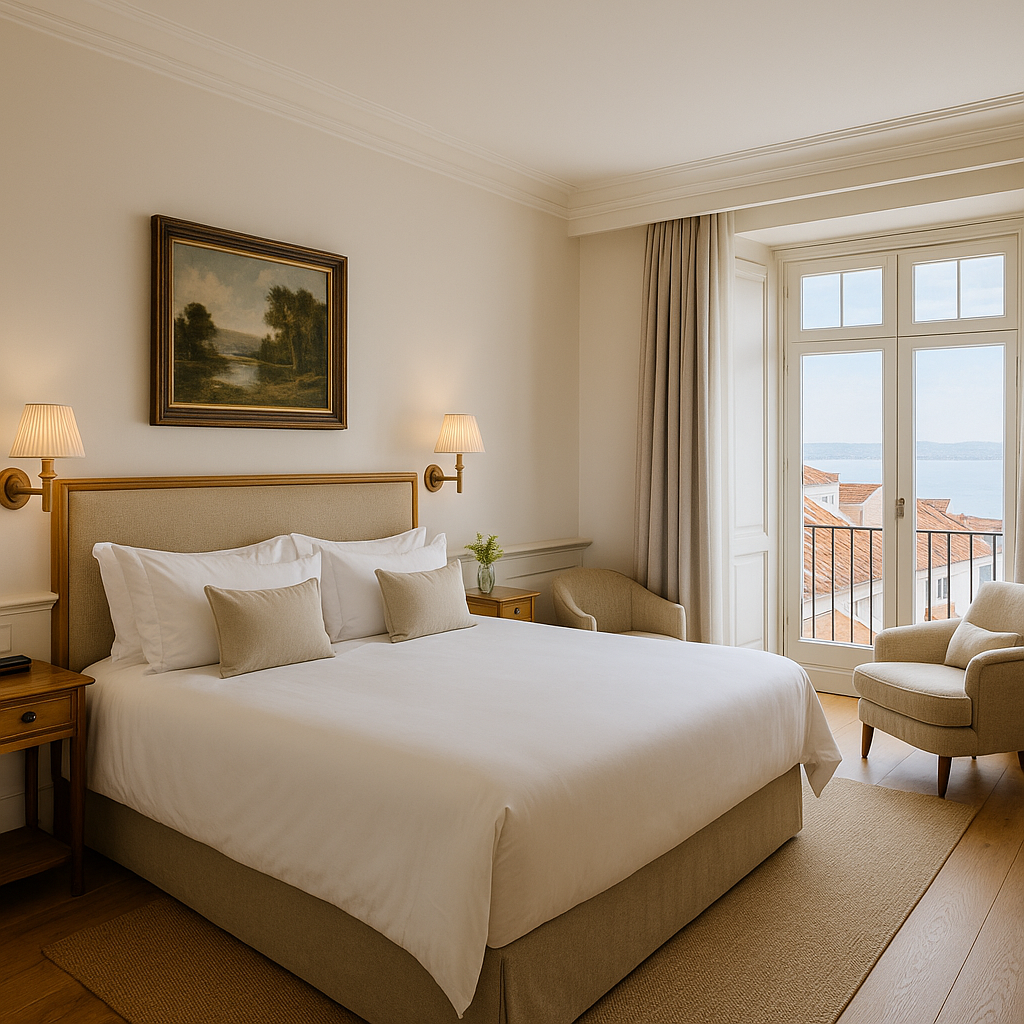
The 1908 Lisboa Hotel, nestled in the vibrant Intendente district, serves as an excellent base for exploring Portugal's diverse wine regions. While Lisbon itself isn't a wine-producing area, several renowned appellations are within easy reach, offering unique tasting experiences and scenic countryside escapes. Prepare for a delightful journey into Portuguese viticulture.
The Bucelas Wine Region – Lisbon's White Wine Gem
Just north of Lisbon, the Bucelas Demarcated Region is one of Portugal's oldest, celebrated for its crisp, aromatic white wines, predominantly made from the Arinto grape. This region is often called the 'Chablis of Portugal' due to its mineral-rich character. Wineries here, such as Quinta da Romeira or Quinta do Boição, offer tours and tastings, providing insight into their winemaking traditions. The landscape is gentle, dotted with vineyards and small villages, making for a pleasant escape. The most comfortable way to reach this area, approximately 30-40 minutes from your hotel, is with a private driver.Palmela and the Setúbal Peninsula – Fortified and Red Wines
Crossing the iconic 25 de Abril Bridge south of Lisbon, you enter the Setúbal Peninsula, a region famed for its luscious Moscatel de Setúbal fortified wine and robust red wines, particularly those made from the Castelão grape. The town of Palmela, with its impressive castle, and Azeitão, known for its cheese and pastries, are key stops. Distinguished wineries like José Maria da Fonseca or Casa Agrícola Horácio Simões welcome visitors for tours that often include cellar visits and tastings. This journey typically takes around 45-60 minutes by private driver, offering picturesque views of the Tagus estuary.The Oeste Region – Coastal Influences and Diverse Styles
Venturing further north-west from Lisbon, towards the Atlantic coast, lies the Oeste (West) wine region. This area encompasses a variety of microclimates, leading to a broad spectrum of wines, from fresh whites to elegant reds. While a bit further afield (approximately 1 hour 15 minutes to 1 hour 30 minutes by private driver), a trip here can be combined with visits to historical sites like the medieval town of Óbidos or the magnificent Alcobaça Monastery. Several family-run wineries and larger estates in the Oeste region provide engaging tours and tastings, showcasing the unique character imparted by the coastal proximity.Always verify opening hours and book winery visits ahead of time, especially for smaller, family-run estates, to ensure a personalised experience and avoid disappointment.
Costs & Timing for Wine Experiences
The cost of wine experiences varies depending on the winery, the type of tour, and the number of wines tasted. Most wineries charge a fee for guided tours and tastings. For a private driver, pricing depends on factors such as the route, vehicle choice, and the duration of your trip. It is advisable to request a tailored quote based on your specific itinerary and group size. A typical wine day trip, including travel and visits to one or two wineries, can range from a half-day (4-5 hours) to a full-day excursion (7-8 hours), allowing ample time to immerse yourself in the local wine culture.Frequently Asked Questions
What types of wines are primarily produced near Lisbon?
The region near Lisbon offers a diverse range. Bucelas is known for crisp white wines (Arinto grape). The Setúbal Peninsula excels with fortified Moscatel de Setúbal and robust red wines (Castelão grape). The Oeste region produces a variety of whites and reds with coastal influences.
Are the wineries easily accessible from 1908 Lisboa Hotel?
Yes, the primary wine regions are comfortably accessible. The most convenient way to reach them is by arranging a private driver, ensuring a smooth and stress-free journey directly from your hotel to the winery doors.
Can I combine wine tasting with other activities on a day trip?
Absolutely. Many wine regions are close to historical towns or natural parks. For instance, a trip to the Setúbal Peninsula can include sampling local Azeitão cheese, while a visit to the Oeste region can be paired with exploring Óbidos medieval village or the Alcobaça Monastery.
How long does a typical winery tour and tasting last?
A standard winery tour and tasting session typically lasts between 1 to 2 hours at each location. When planning a day trip, allow for travel time between wineries and ensure you have enough time to enjoy each experience without feeling rushed.
Do wineries offer food pairings with their tastings?
Many wineries, especially those catering to visitors, offer light food pairings with their tastings. These often include regional cheeses, cured meats (charcuterie), and local bread, designed to complement the wines and enhance the tasting experience.
Is it necessary to book winery visits in advance?
Yes, it is highly recommended to book your winery visits and tours in advance. This is particularly important for smaller, family-run estates or during peak tourist seasons to guarantee availability and ensure a personalised experience tailored to your group.
Are these wine experiences suitable for non-drinkers?
Wine experiences can still be enjoyable for non-drinkers. Many wineries offer non-alcoholic alternatives, and the tours often provide fascinating insights into viticulture, history, and beautiful vineyard scenery. The focus can extend beyond just the tasting to the cultural aspect.
What is the best time of year to visit the wine regions near Lisbon?
Spring (April-June) and Autumn (September-October) are generally considered the best times. Spring offers pleasant weather and lush green vineyards, while Autumn, particularly September and October, coincides with the grape harvest season, providing a vibrant and authentic atmosphere.