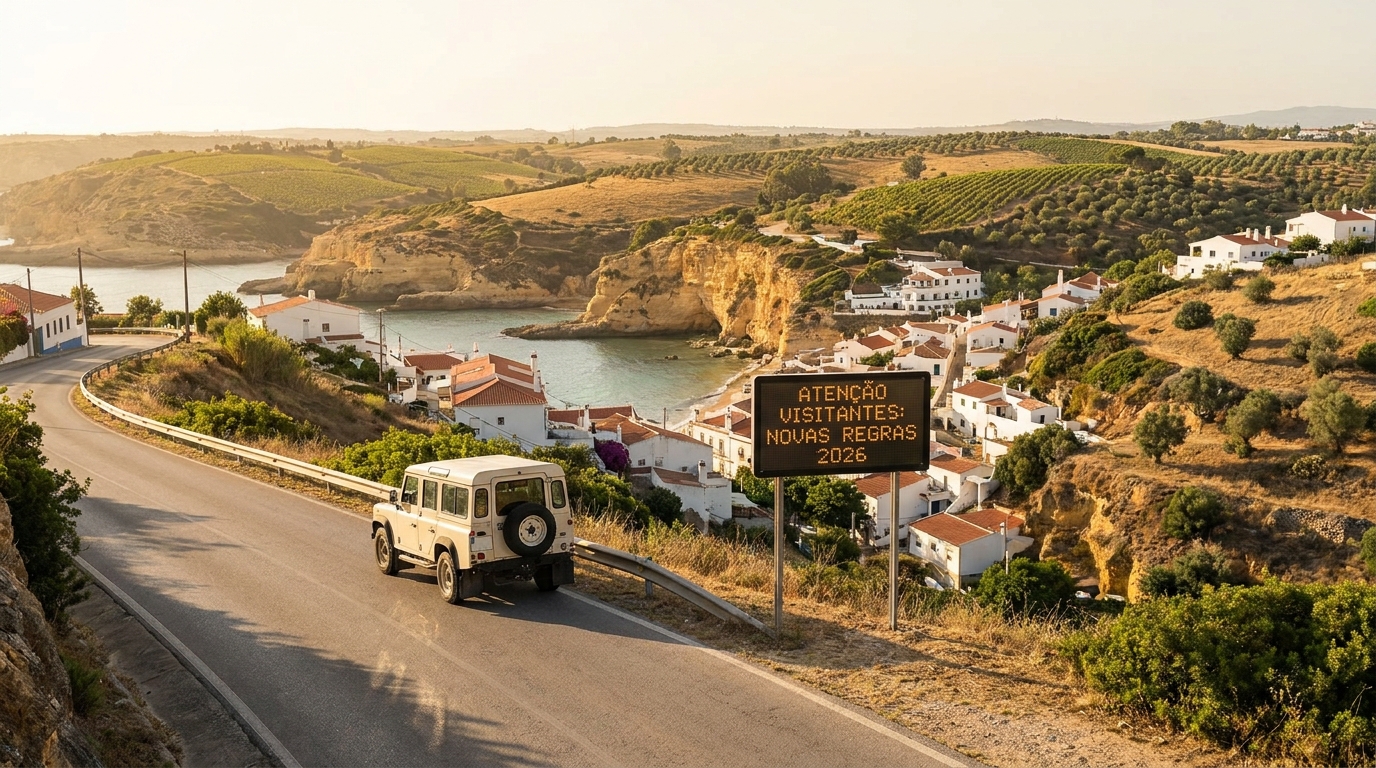
Portugal offers an unparalleled driving experience, with scenic routes connecting historic cities, sun-drenched coastlines, and verdant vineyards. For those planning to explore this beautiful country by road in 2026, it's essential to be aware of the latest regulations and practical advice. This guide provides a clear overview of the new rules and considerations for tourists behind the wheel, ensuring a smooth and enjoyable journey.
New Toll Systems & Payment Methods for 2026
Portugal's extensive motorway network offers efficient travel between its diverse regions, but most routes operate on an electronic toll system. For visitors driving in Portugal in 2026, understanding these systems is paramount, as traditional manual payment booths are increasingly rare. The most practical solution for foreign-registered vehicles is to utilise a dedicated electronic toll payment device or register your vehicle's number plate with an approved system. Options like 'Via Verde Visitors' provide a transponder that automatically records your tolls, linking payments directly to your chosen bank account. This eliminates the need to stop and ensures seamless passage through toll gates. Alternatively, some specific services allow for online registration of your vehicle's number plate to a credit card, enabling post-payment for tolls incurred. It is vital to arrange your toll payment solution before you begin driving, as unpaid tolls can accrue significant fines and administrative penalties. Always consult the official Portuguese toll road operator websites for the most up-to-date registration procedures and the various options tailored for international visitors, ensuring a compliant and stress-free journey.Updated Traffic Regulations & Penalties
Driving regulations in Portugal are generally consistent with European standards, but some updates and enforcement priorities for 2026 warrant attention. Speed limits are strictly enforced: typically 120 km/h on motorways, 90 km/h on main roads, and 50 km/h in urban areas, unless otherwise signposted. Always observe local signage, particularly around towns and villages where limits can drop quickly. The use of mobile phones is strictly prohibited unless using a hands-free system; holding a phone for any reason, even when stationary in traffic, can result in significant fines and penalty points. Seatbelt use is mandatory for all occupants, front and rear. Portugal maintains a low legal alcohol limit for drivers, set at 0.5 grams per litre of blood, with stricter limits for new drivers. Penalties for infractions, especially for serious offences like drink-driving or dangerous driving, can be severe, including immediate licence confiscation and hefty fines. Adherence to these rules not only ensures your safety but also avoids unwelcome legal complications.Driving in Cities & Environmental Zones
Navigating Portugal's historic cities like Lisbon and Porto requires awareness of specific urban driving rules, including Low Emission Zones (Zonas de Emissões Reduzidas – ZER). These zones restrict access for older, more polluting vehicles, typically based on their Euro emission standard. In 2026, these restrictions remain in force and may even expand. For instance, central Lisbon's ZER areas have specific hours and vehicle age cut-offs. It is crucial to check if your vehicle complies before entering these zones, as non-compliant vehicles face fines. Information on eligible vehicle types and zone boundaries is available on the respective city council websites. Parking in urban centres can also be challenging. Most street parking requires payment via meters or apps, and designated parking garages are often the most convenient, albeit paid, option. Always respect parking signs, as illegal parking can lead to towing and fines. For local city travel, walking, taxis, Uber/Bolt, or even a scenic ride on a historic yellow tram offer excellent alternatives to driving.Always carry physical copies of your driving licence, vehicle registration, and insurance documents; while digital versions are convenient, roadside checks may require hard copies.
Costs & Timing for Your Drive
When planning your driving itinerary across Portugal, it's helpful to consider the associated costs and realistic travel times. Toll costs, while not prohibitive, do add up, especially on longer journeys like Lisbon to Porto. Fuel prices are comparable to other Western European countries and fluctuate, so budgeting for regular refuelling stops is prudent. Parking in city centres typically incurs charges, ranging from hourly street parking to daily rates in underground garages. For inter-city travel, the most comfortable way to reach your destination is often with a private driver, allowing you to relax and enjoy the scenery. For example, a drive from Lisbon to Porto typically takes around 3 to 3.5 hours via the A1 motorway, covering approximately 310 kilometres. Travelling from Lisbon to the Algarve (e.g., Faro) is about 2.5 to 3 hours, spanning roughly 280 kilometres. A trip from Lisbon to Évora, in the Alentejo region, takes approximately 1.5 hours over 130 kilometres. These estimates are for direct driving without significant stops, so always factor in breaks and potential traffic, particularly near major urban areas.Frequently Asked Questions
Do I need an International Driving Permit (IDP) for Portugal in 2026?
If your driving licence was issued outside the EU/EEA, an IDP is highly recommended alongside your national licence. It translates your licence into multiple languages and is often required by law enforcement.
What are the main changes to toll payments?
The main change is the increased prevalence of electronic-only tolls. Tourists should pre-register their vehicle with a system like 'Via Verde Visitors' or an equivalent service to avoid fines.
Are there new speed limits to be aware of?
Standard speed limits (120 km/h motorways, 90 km/h main roads, 50 km/h urban) remain, but enforcement is strict, and local deviations, especially in villages, must be observed.
Can I use my mobile phone while driving?
No, using a handheld mobile phone is strictly prohibited. Only hands-free systems are permitted. This rule is rigorously enforced.
What are the rules for Low Emission Zones in Lisbon and Porto?
Both Lisbon and Porto have Zonas de Emissões Reduzidas (ZER) that restrict older, more polluting vehicles. Check the respective city council websites for vehicle age/emission standard requirements and zone boundaries before entering.
What emergency equipment must I carry in the car?
You must carry a high-visibility vest (inside the passenger compartment), a warning triangle, and a spare tyre or tyre repair kit. Headlight beam deflectors are also essential for right-hand drive cars.
Is it easy to find parking in Portuguese cities?
Parking in major cities can be challenging. Paid street parking via meters or apps is common, and underground car parks are widely available, offering a more convenient, albeit paid, solution.
What is the alcohol limit for drivers?
The legal blood alcohol limit for drivers in Portugal is 0.5 grams per litre. For new drivers (less than three years of experience), the limit is even stricter at 0.2 grams per litre.