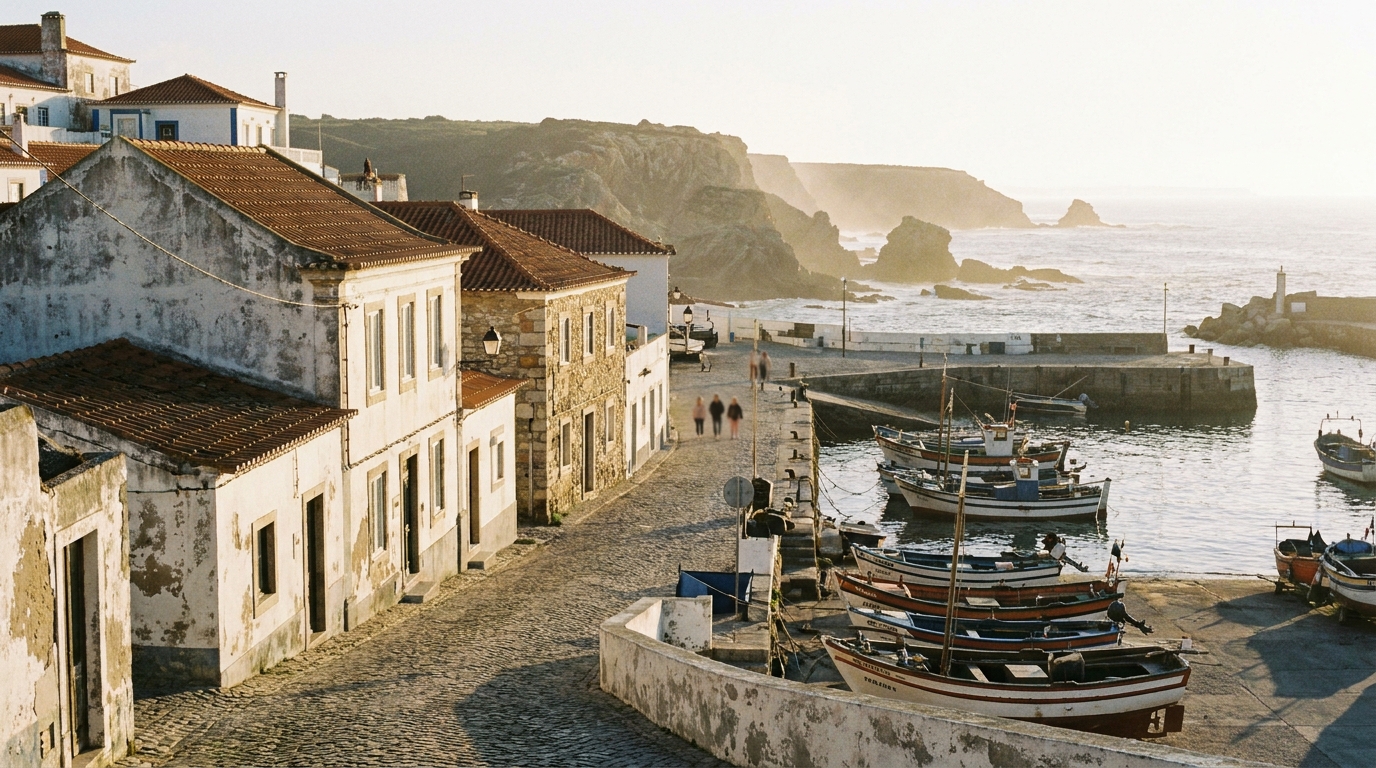
Portugal’s coastline is dotted with enchanting fishing villages, each offering a unique glimpse into the country's rich maritime heritage. From dramatic cliffs and traditional boats to bustling markets and fresh seafood, these coastal gems provide an authentic travel experience. This guide will help you navigate these picturesque locales, ensuring a memorable journey.
Central Coast Charms: Nazaré, Ericeira, and Azenhas do Mar
The central coast of Portugal boasts some of its most iconic fishing villages, easily accessible from Lisbon. Nazaré, world-renowned for its colossal waves in winter, offers a dramatic cliffside setting and a vibrant fishing tradition. Visit Sítio for panoramic views and observe the traditional 'sete saias' (seven skirts) worn by local women. Further south, Ericeira, a World Surfing Reserve, blends its fishing roots with a laid-back surf culture, perfect for enjoying fresh seafood in a relaxed atmosphere. Nearby, Azenhas do Mar is a stunning clifftop village with whitewashed houses cascading down to natural sea pools. The most comfortable way to reach these destinations from Lisbon is with a private driver; expect approximately 1 hour and 15 minutes to Ericeira, or around 1 hour and 30 minutes to Nazaré.Alentejo's Wild Coast: Porto Covo and Vila Nova de Milfontes
Venturing south into the Alentejo region reveals a wilder, more rugged coastline, less developed but equally captivating. Porto Covo is a postcard-perfect village with a charming main square and a small, sheltered harbour, making it ideal for a tranquil escape. Its pristine beaches and coves are perfect for quiet exploration. Vila Nova de Milfontes, nestled at the mouth of the Mira River, is a popular spot for both locals and visitors, offering a mix of river beaches and ocean fronts. The Rota Vicentina walking trail also passes through these areas, showcasing breathtaking cliffside scenery. A private driver from Lisbon can transport you to Vila Nova de Milfontes in approximately 2 hours and 30 minutes to 3 hours, offering scenic views along the way.Algarve's Authentic Corners: Olhão and Ferragudo
Beyond the bustling resorts of the Algarve, you'll find authentic fishing villages that retain their traditional character. Olhão, with its distinctive cubist architecture, is a working fishing port and home to one of Portugal's largest and most vibrant fish markets. It's also the main gateway to the pristine barrier islands of the Ria Formosa Natural Park. Ferragudo, located across the Arade River from Portimão, is a picturesque village defined by its steep, winding streets, whitewashed houses, and a charming harbour. It offers stunning views of the river and the historic São João do Arade Fort. From Faro airport, a private driver can reach Olhão in about 20-30 minutes, while Ferragudo is approximately a 45-minute journey.Always seek out the 'prato do dia' (dish of the day) in local tavernas for an authentic, often budget-friendly, taste of the region's culinary specialities, typically featuring the freshest catch.
Costs & Timing
Exploring Portugal's fishing villages offers a range of experiences to suit various budgets. Accommodation options vary from charming, budget-friendly guesthouses and local 'alojamento local' to mid-range boutique hotels and premium cliffside retreats. Dining can be very reasonable in traditional 'tascas' or local cafes, particularly for lunch, while upscale restaurants offer a more premium experience. Many natural attractions, such as beaches and scenic viewpoints, are free to enjoy. Guided tours, boat trips to islands, or specific cultural experiences will incur additional costs; check the official sites for current ticket prices. The ideal time to visit is during spring (April-May) or autumn (September-October) for pleasant weather and fewer crowds. Summer (June-August) is vibrant but busier and generally more expensive. For private transfers and bespoke tours, pricing depends on group size, vehicle and route; we recommend requesting a tailored quote from our local partner Portugal Magik for personalised travel arrangements.Frequently Asked Questions
What is the best time of year to visit Portugal's fishing villages?
The spring (April to May) and autumn (September to October) offer the most pleasant weather, fewer crowds, and ideal conditions for exploring. Summer is vibrant but can be very busy, while winter is best for witnessing Nazaré's big waves, though other villages might be quieter.
Are the fishing villages suitable for families?
Absolutely. Many villages, such as Vila Nova de Milfontes and Ferragudo, have calm beaches and family-friendly activities. The relaxed pace and opportunity to enjoy fresh air and local culture make them ideal for family holidays.
What local dishes should I try in a Portuguese fishing village?
You must try 'peixe grelhado' (grilled fish), often caught that day. Other specialities include 'arroz de marisco' (seafood rice), 'cataplana de marisco' (seafood stew, especially in the Algarve), and 'ameijoas à Bulhão Pato' (clams in garlic and coriander sauce).
How long should I spend in each fishing village?
For a brief visit, a few hours or a half-day can cover the main sights. To truly soak in the atmosphere and enjoy the local life, consider staying one or two nights. This allows for more relaxed exploration and evening dining.
Are these villages very touristy?
Some, like Nazaré during the big wave season or Ericeira in summer, can attract significant crowds. However, many retain a strong sense of local authenticity, especially outside peak times. Olhão and Porto Covo, for example, offer a more genuine local feel.
What are the best ways to get around within a village?
Most fishing villages are best explored on foot. Their narrow, winding streets and compact centres are perfect for walking. For slightly longer distances within a larger town, local taxis or ride-hailing services like Uber/Bolt are available.
Can I visit the Ria Formosa islands from Olhão?
Yes, Olhão is a primary gateway to the Ria Formosa Natural Park. You can arrange boat trips to islands like Culatra, Armona, and Farol from the harbour. These trips offer stunning beaches and a chance to experience the island communities.
Is it easy to find fresh fish to buy directly?
In many villages, particularly those with active fishing ports like Olhão or Peniche, you can visit the local fish markets (mercado de peixe) in the mornings to see and purchase the day's catch directly from local fishermen or vendors.