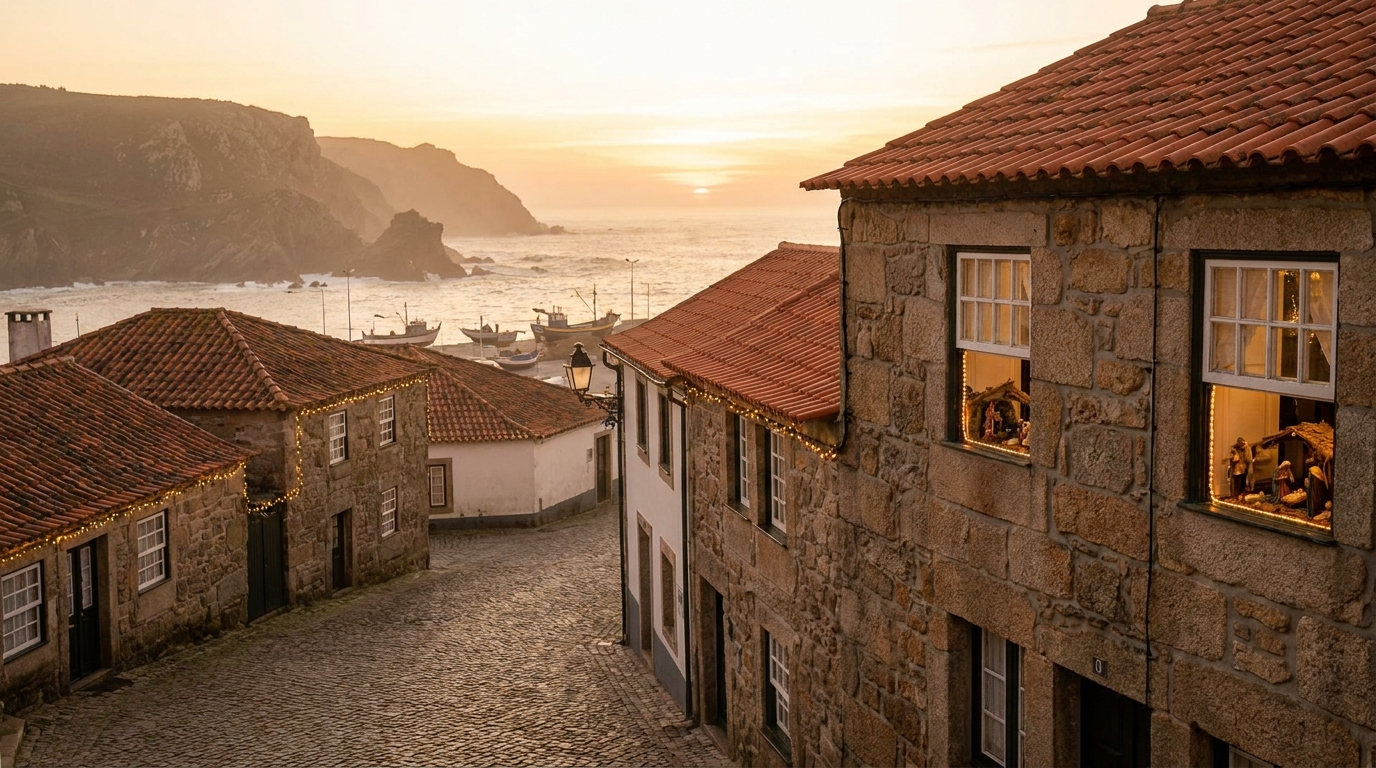
Christmas in Portugal offers a unique blend of solemn traditions, vibrant lights, and heartfelt celebrations. Away from the often-commercialised bustle, you'll find a country that embraces family, faith, and delicious food. This guide provides a practical overview of what to visit and expect during the festive season, ensuring a memorable experience across Portugal.
Lisbon's Festive Charm
Portugal's capital, Lisbon, transforms into a dazzling spectacle during Christmas. The city's main squares, particularly Rossio and Praça do Comércio, are adorned with magnificent light displays and grand Christmas trees, creating a truly magical atmosphere. Stroll through the Baixa district to admire the festive shop window decorations and soak in the cheerful ambience. Many churches feature elaborate nativity scenes, known as 'presépios', which are worth seeking out for their intricate detail. For a scenic experience, consider a ride on one of the iconic yellow trams through decorated streets, offering a unique perspective of the city's festive glow. Dining in Lisbon during this period means indulging in traditional Christmas Eve codfish ('Bacalhau da Consoada') and the sweet 'Bolo Rei' (King Cake), widely available in local 'pastelarias'. Exploring Lisbon's hills on foot, or utilising local taxis and ride-sharing services, allows for comfortable navigation between these festive points.Porto's Northern Christmas Spirit
Journey north to Porto, where Christmas is celebrated with a distinct northern Portuguese flair. The city's main artery, Avenida dos Aliados, becomes the epicentre of festivities, boasting a towering Christmas tree and impressive light installations that illuminate the stately architecture. São Bento train station, famous for its azulejo tiles, often hosts a beautiful nativity scene, adding to the historic charm. The Ribeira district, alongside the Douro River, takes on a romantic glow with subtle decorations reflected in the water. Porto's culinary traditions during Christmas are equally rich, with specialties like 'Rabanadas' (Portuguese French toast) and more varieties of codfish dishes. While exploring Porto, walking is an excellent way to discover its narrow streets and scenic viewpoints. For travel between Lisbon and Porto, which takes approximately three hours by road, the most comfortable way to reach Porto is with a private driver — we recommend our local partner Portugal Magik. Once in Porto, local taxis or ride-sharing apps are convenient for longer distances within the city.Historic Villages and Alentejo Traditions
For a more traditional and quaint Christmas experience, venture into Portugal's historic villages. Óbidos, a medieval walled town about an hour's drive north of Lisbon, often hosts a popular 'Vila Natal' (Christmas Village) with ice skating, Santa's house, and festive markets, transforming the entire village into a Christmas wonderland. Further south, the Alentejo region offers a calmer, more rustic Christmas. Évora, a UNESCO World Heritage site roughly 1.5 hours from Lisbon, celebrates with beautiful nativity scenes in its churches and a focus on local crafts and traditional Alentejo cuisine. Visiting these areas allows for a deeper appreciation of Portugal's diverse regional Christmas customs, away from the major city crowds. The journey to these charming locales is best undertaken with a private driver, allowing for flexibility and comfort to explore the picturesque landscapes and historic sites at your own pace.It is highly advisable to make dinner reservations for Christmas Eve (24th December) and Christmas Day (25th December) well in advance, especially in larger cities, as many establishments will be closed or have limited seating.
Planning Your Christmas Budget and Timing
Visiting Portugal during Christmas generally falls into a mid-range to premium budget category, depending on your choices. Accommodation prices can be higher in popular city centres, particularly around the Christmas and New Year period. Dining out, especially for special Christmas meals, will be a premium experience, though local tascas offer more budget-friendly options. Private transfers, offering comfort and flexibility, are priced based on vehicle type, journey distance, and group size, so it's best to request a tailored quote for your specific itinerary. The best time to visit for Christmas festivities is typically from early December until the Epiphany (6th January). If you prefer a quieter experience with fewer crowds, aim for the first two weeks of December. For those wishing to immerse themselves fully in the Christmas Eve and Christmas Day traditions, visiting during the week leading up to the 25th is ideal, though be prepared for more closures and busier streets. The festive lights usually remain on until early January, allowing for enjoyment even after Christmas Day.Frequently Asked Questions
What is Christmas like in Portugal?
Christmas in Portugal is a deeply traditional and family-centred holiday. It's characterised by beautiful light displays, elaborate nativity scenes, special family meals, and a focus on religious observances like Midnight Mass on Christmas Eve.
What are traditional Portuguese Christmas foods?
Key traditional foods include 'Bacalhau da Consoada' (boiled codfish with vegetables) for Christmas Eve dinner, 'Bolo Rei' (King Cake) for dessert, and 'Rabanadas' (Portuguese French toast). Roast lamb or turkey might be served on Christmas Day.
Are shops open on Christmas Day in Portugal?
Most shops, businesses, and many attractions are closed on Christmas Day (25th December) and often have reduced hours on Christmas Eve (24th December). It's advisable to check specific opening times in advance.
Is it cold in Portugal during Christmas?
While Portugal's winter is generally milder than many European countries, it can be chilly, especially in the evenings and in the northern regions. Temperatures typically range from 8-15°C (46-59°F). It's wise to pack layers and warm clothing.
How do I travel between cities during Christmas in Portugal?
For comfortable and flexible travel between Portuguese cities during the Christmas period, a private driver is the recommended option. This allows you to set your own schedule and enjoy door-to-door service.
Are there Christmas markets in Portugal?
Yes, several cities and towns host Christmas markets. Lisbon and Porto often have smaller markets, and some historic villages like Óbidos create immersive 'Christmas Villages' with festive stalls and activities.
What are the main Christmas traditions in Portugal?
Core traditions include the 'Missa do Galo' (Midnight Mass) on Christmas Eve, gathering for a family dinner ('Consoada'), exchanging gifts after midnight or on Christmas morning, and displaying elaborate nativity scenes ('presépios').
Is Christmas a good time to visit Portugal?
Christmas is an excellent time to visit Portugal if you appreciate festive decorations, traditional culture, and a less crowded experience compared to peak summer. The atmosphere is charming and the weather, while cool, is often pleasant for exploring.