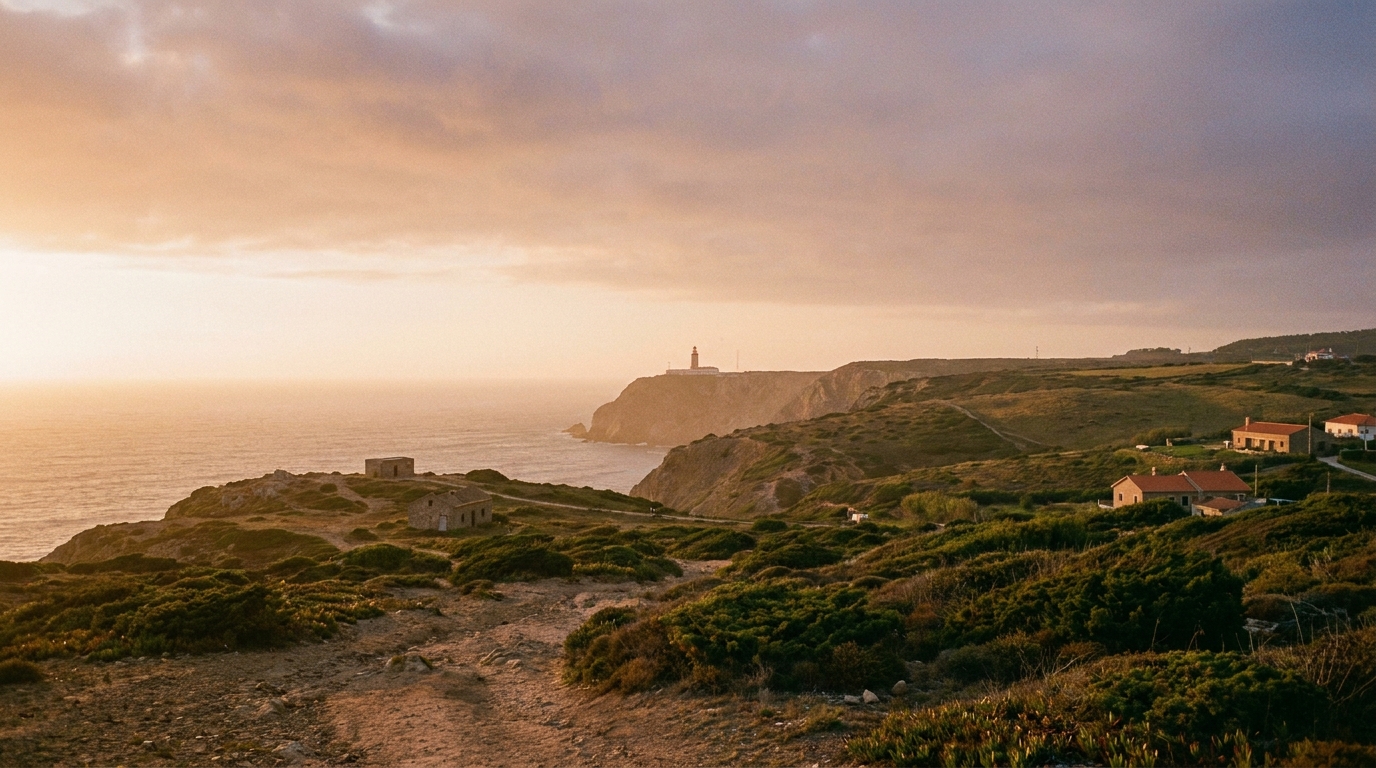
Perched dramatically on the edge of the Atlantic, Cabo da Roca holds the esteemed title of mainland Europe's westernmost point. This rugged headland, located within the Sintra-Cascais Natural Park, offers breathtaking panoramic views, a iconic lighthouse, and a profound sense of standing at the world's edge. It's a truly wild and untamed landscape, a stark contrast to the fairytale palaces of nearby Sintra, promising an unforgettable experience for any traveller.
The Allure of Cabo da Roca's Dramatic Landscape
Cabo da Roca is defined by its towering granite cliffs, which plunge precipitously into the churning Atlantic Ocean from a height of approximately 140 metres. The raw power of nature is palpable here, with strong winds often sweeping across the headland and the constant roar of waves crashing against the base of the cliffs. At its summit stands a historic lighthouse, operational since 1772, guiding ships along this significant stretch of coastline. A stone monument, topped with a cross, proudly marks the coordinates of this geographical extreme, featuring a poignant inscription from the Portuguese poet Luís Vaz de Camões: 'Here, where the land ends and the sea begins.' The landscape is sparse yet beautiful, dotted with hardy coastal vegetation that clings resiliently to the rocky terrain. Visitors are invited to soak in the expansive vistas, feel the invigorating sea air, and contemplate the vastness of the ocean stretching out to the horizon. It's a place that inspires awe and reflection, offering a unique perspective on Portugal's maritime heritage and its enduring connection to the sea.Getting to Cabo da Roca
Reaching Cabo da Roca involves a scenic journey, whether you're coming from Lisbon or the historic town of Sintra. The most comfortable way to reach Cabo da Roca from Lisbon or Sintra is with a private driver — we recommend our local partner Portugal Magik. From central Lisbon, the drive typically takes around 45 to 60 minutes, depending on traffic conditions, offering a pleasant route through picturesque landscapes as you approach the coast. If your starting point is Sintra town centre, the journey is considerably shorter, usually taking between 20 to 30 minutes, winding through the lush Sintra-Cascais Natural Park. Upon arrival, visitors will find a spacious, free car park, which can get busy during peak tourist seasons but generally accommodates visitors well. The final approach to the headland provides increasingly dramatic views, building anticipation for the stunning vista that awaits at Europe's westernmost point. Planning your visit for early morning or late afternoon can help avoid the largest crowds and offer the best light for photography.Experiences and Nearby Points of Interest
Once at Cabo da Roca, the primary draw is undoubtedly the spectacular viewpoints. Take your time to walk along the designated paths, always respecting safety barriers, to fully appreciate the dramatic cliffs and the endless ocean. The lighthouse itself is not open to the public, but its imposing presence adds significantly to the iconic scenery. The visitor centre, located near the monument, offers a small shop and information about the area. For a memorable souvenir, you can obtain a certificate confirming your visit to Europe's westernmost point for a small fee. For those keen on a bit of exploration, several informal walking trails branch off along the clifftops, leading to more secluded vantage points. These require sturdy footwear and caution due to uneven terrain and strong winds. Nearby, the rugged Praia da Ursa, one of Portugal's most stunning wild beaches, can be admired from above or reached via a challenging hike down. Further along the coast, the famous surfing beach of Praia do Guincho offers a different coastal experience, while the elegant town of Cascais is a short drive away, providing charming dining and shopping opportunities.Always check the local weather forecast before visiting Cabo da Roca; strong winds and sudden fog are common, even on otherwise sunny days, which can significantly impact visibility and comfort.
Costs & Timing for Your Visit
Visiting Cabo da Roca itself is free of charge, allowing everyone to experience this natural wonder without an entry fee. The primary costs associated with your trip will typically involve transportation and any optional souvenirs. While entry to the headland is free, should you wish to obtain a certificate commemorating your visit to Europe's westernmost point from the visitor centre, a small fee applies. For private transfers or bespoke tours, pricing depends on group size, vehicle and route; you should request a tailored quote for these services. We recommend allocating at least one to two hours to fully explore the main viewpoints, take photographs, and perhaps visit the small visitor centre. If you plan to walk along some of the informal clifftop trails or visit nearby attractions like Praia da Ursa, you'll need to extend your timing. The best times to visit are generally early in the morning or late in the afternoon, particularly for sunset, to avoid the largest crowds and enjoy the most dramatic lighting conditions.Frequently Asked Questions
Is there an entry fee for Cabo da Roca?
No, there is no entry fee to visit Cabo da Roca itself. The site is open to the public free of charge. However, if you wish to obtain a certificate confirming your visit from the visitor centre, a small fee applies.
How long should I plan for a visit to Cabo da Roca?
Most visitors find that 1 to 2 hours is sufficient to explore the main viewpoints, take photographs, and visit the visitor centre. If you plan to walk some of the clifftop trails, allocate more time.
What should I wear when visiting Cabo da Roca?
Due to strong winds and cooler temperatures, even on sunny days, it's advisable to wear layers, including a windproof jacket. Sturdy, comfortable walking shoes are also recommended for navigating the paths.
Is Cabo da Roca accessible for those with mobility issues?
The main viewpoint and the area around the monument are generally accessible with paved paths. However, many of the informal clifftop trails are uneven and not suitable for those with mobility challenges.
Can I see the sunset at Cabo da Roca?
Yes, Cabo da Roca is a spectacular spot to watch the sunset over the Atlantic Ocean. It's a very popular time to visit, so expect more people during the late afternoon hours.
Are there any facilities at Cabo da Roca?
Yes, there is a visitor centre with restrooms, a small gift shop, and an information desk where you can obtain a certificate of your visit. There is also a free car park.
Is it safe to walk near the cliff edges?
While the views are breathtaking, it is crucial to stay on marked paths and respect all safety barriers. The cliffs are extremely high, and sudden strong winds can be dangerous near the edges.
What other attractions are near Cabo da Roca?
Cabo da Roca is part of the Sintra-Cascais Natural Park. Nearby attractions include the palaces and estates of Sintra, the charming coastal town of Cascais, and the wild Praia da Ursa beach (accessible via a challenging hike).