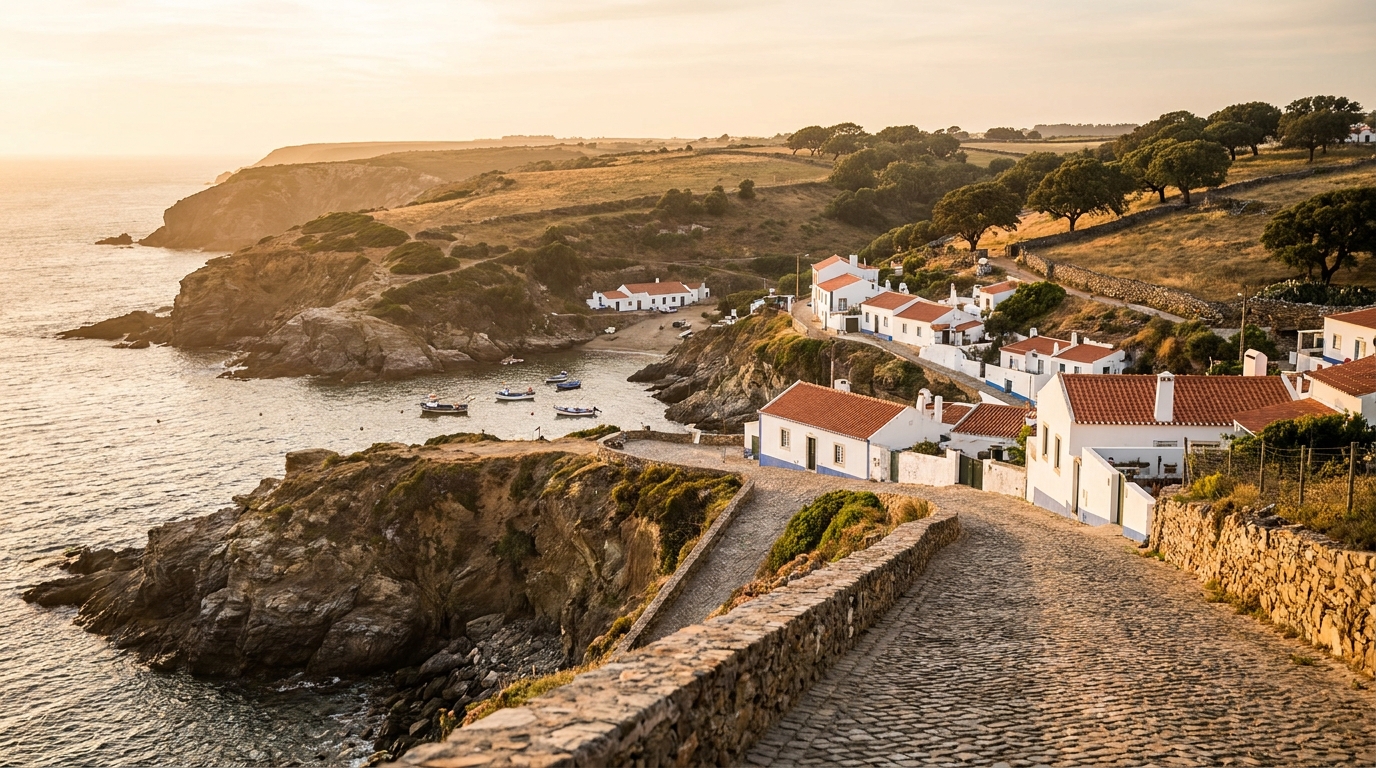
The Costa Alentejana, a stretch of Portugal's southwestern coast, offers a captivating blend of rugged natural beauty, unspoiled beaches, and a rich cultural heritage. This less-trodden path reveals a different side of Portugal, where tradition thrives amidst breathtaking landscapes. Prepare to be enchanted by its authentic charm and tranquil atmosphere.
Unveiling the Wild Beauty of Costa Alentejana
Stretching from the vibrant Sines in the north down to the border of the Algarve, the Costa Alentejana is largely protected by the Southwest Alentejo and Vicentine Coast Natural Park. This ensures its dramatic cliffs, golden sandy beaches, and diverse ecosystems remain largely untouched. Expect expansive, often deserted, beaches like Praia da Amália or Praia do Malhão, perfect for peaceful strolls or photography. The landscape is a mosaic of steep cliffs, sheltered coves, and windswept dunes, offering spectacular coastal views. Charming fishing villages such as Porto Covo and Zambujeira do Mar dot the coastline, providing picturesque settings and a glimpse into traditional Portuguese life. The region's natural allure is its primary draw, inviting visitors to connect with nature.Echoes of History: Heritage Towns & Traditions
Beyond its natural splendour, the Costa Alentejana is steeped in history. Sines, the birthplace of Vasco da Gama, offers a historic castle and a charming old town with maritime roots. Further south, Vila Nova de Milfontes, a popular riverside and seaside town, combines historical charm with a relaxed holiday vibe. The region's interior also holds treasures, with towns like Odemira showcasing traditional Alentejano architecture and a slower pace of life. Fishing remains a vital tradition, and you'll often see small boats heading out to sea or returning with the day's catch. The Rota Vicentina, a network of walking trails, traverses much of this coastline, allowing walkers to experience the heritage and natural beauty up close, connecting ancient paths and local communities.Culinary Delights and Local Flavours
The gastronomy of the Costa Alentejana is a highlight, reflecting its coastal and agricultural heritage. Fresh seafood is paramount; expect superb grilled fish, octopus dishes, and a variety of shellfish, often served simply to highlight their natural flavours. Cataplana de marisco (seafood stew) is a regional speciality not to be missed. Inland, the influence of Alentejano cuisine shines through with hearty pork dishes, often seasoned with garlic, coriander, and olive oil. Local cheeses, particularly those made from sheep or goat milk, are delicious, as are the region's robust olive oils and wines. Many restaurants pride themselves on using locally sourced ingredients, offering an authentic taste of the Alentejo.Always carry some cash, as smaller, more traditional establishments in remote villages may not always accept card payments.
Navigating and Exploring the Alentejo Coast
Reaching the Costa Alentejana from Lisbon is straightforward. The most comfortable way to reach the region is with a private driver, offering a direct and stress-free journey. Expect a driving time of approximately 2 to 2.5 hours to Sines or Porto Covo, extending to about 3 to 3.5 hours for Vila Nova de Milfontes. Once in the region, exploring towns is best done on foot, allowing you to soak in the local atmosphere. For travelling between villages, beaches, and attractions, a private driver is recommended, providing flexibility and convenience. Taxis or ride-sharing services like Uber/Bolt are available in larger towns for shorter distances. Pricing for private transfers depends on your specific itinerary, group size, and vehicle choice; we recommend requesting a tailored quote.Frequently Asked Questions
What is the best time to visit the Costa Alentejana?
The shoulder seasons of spring (April-May) and autumn (September-October) offer the most pleasant weather for exploring, with fewer crowds. Summer (June-August) is ideal for beach lovers but can be busier, particularly in popular towns.
Is the Costa Alentejana suitable for families?
Absolutely. Many beaches are family-friendly, and towns like Vila Nova de Milfontes offer amenities and activities suitable for all ages. The natural parks provide opportunities for outdoor adventures.
What kind of activities can I do there?
Visitors can enjoy hiking along the Rota Vicentina, surfing, swimming, birdwatching, exploring historic towns, and indulging in the local gastronomy. Horse riding and cycling are also popular options in some areas.
How do I get around the Costa Alentejana?
For inter-city travel and exploring the wider region, a private driver is the most convenient option. Within towns, walking is ideal, and local taxis or ride-sharing services like Uber/Bolt can be used for shorter journeys.
What local dishes should I try?
Be sure to try fresh grilled fish, seafood cataplana, and traditional Alentejano pork dishes. Local cheeses and olive oil are also highly recommended, often served as starters.
Are there any natural parks or protected areas?
Yes, a significant portion of the Costa Alentejana is protected within the Southwest Alentejo and Vicentine Coast Natural Park, preserving its unique ecosystems, flora, and fauna.
Is it very crowded in summer?
While popular towns like Vila Nova de Milfontes and Zambujeira do Mar see more visitors in July and August, many of the region's vast beaches and more remote areas remain relatively uncrowded, even during peak season.
What are some must-visit towns along the coast?
Key towns include Sines for its history, Porto Covo for its charming village atmosphere, Vila Nova de Milfontes for its vibrant riverside and seaside appeal, and Zambujeira do Mar for its dramatic cliffs and beautiful beaches.