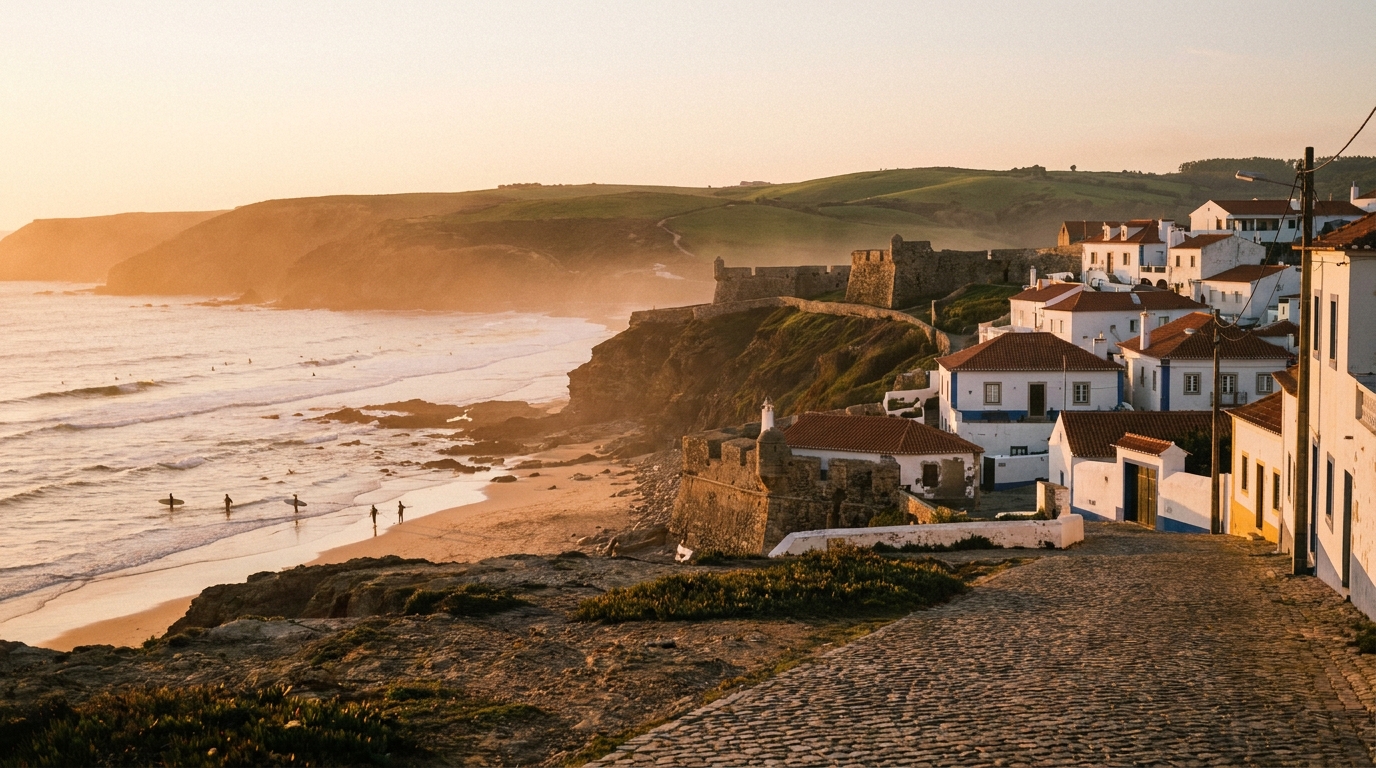
Portugal's Atlantic coastline is a magnet for those seeking dramatic natural beauty, vibrant surf culture, and mesmerising sunsets. Imagine the golden hour painting the sky as the last surfers catch their waves – a truly captivating scene. This guide helps you discover the most evocative spots to experience this unique blend of natural splendour and laid-back coastal charm.
Choosing Your Golden Hour Coastline
To fully immerse yourself in Portugal's surf and sunset allure, selecting the right location is paramount. Ericeira, a designated World Surfing Reserve, offers consistent waves for all skill levels and a charming town atmosphere. Its cliff-top views provide spectacular vantage points for sunset photography, often featuring local surfers against a fiery sky. Further north, the Peniche and Baleal peninsula boasts a relaxed surf vibe, famous for its varied breaks and stunning beaches that face west, guaranteeing epic sunset displays over the Atlantic. The town of Peniche itself has a working harbour, while Baleal offers a more bohemian, surf-centric feel. For a wilder, more rugged experience, head to the Western Algarve, specifically around Sagres and Vila do Bispo. Here, the dramatic cliffs and expansive, often secluded beaches offer a raw, untamed beauty, perfect for those seeking solitude with their sunset and powerful waves. Each region provides a distinct flavour of Portugal's coastal magic, from lively surf camps to tranquil, awe-inspiring vistas.Timing Your Visit for Perfect Waves and Hues
Optimising your trip to Portugal’s surf and sunset beaches involves considering both the seasons and the daily rhythm. For the most consistent surf, particularly for experienced riders, the autumn and winter months (September to March) typically bring larger, more powerful swells to the west coast. However, spring and summer (April to August) offer smaller, more manageable waves, ideal for beginners or those looking for a gentler ocean experience, alongside warmer weather. Regardless of the season, the 'golden hour' for sunsets is, by definition, the hour leading up to the sun dipping below the horizon. It's crucial to check local sunset times, which vary throughout the year – earlier in winter, later in summer. Arriving at your chosen beach at least an hour before sunset allows you to find a good spot, soak in the atmosphere, and witness the changing colours of the sky. Weekends and peak summer months will naturally see more visitors, so if you prefer a quieter experience, consider visiting on weekdays or during the shoulder seasons of late spring or early autumn.Preparing for Your Coastal Experience
Ensuring you have the right gear and mindset will enhance your time on Portugal's beautiful surf beaches at sunset. Essential items include high-factor sun cream, a wide-brimmed hat, sunglasses, and a reusable water bottle. Even in cooler months, the sun's reflection off the water can be intense. For beach comfort, bring a towel or blanket, and perhaps a lightweight layer for when the evening breeze picks up after sunset. If you plan to capture the stunning visuals, a good camera or smartphone is a must. Respect for the local environment is paramount; always take your rubbish with you and be mindful of protected dunes and marine life. If you're keen to try surfing, many of these coastal towns host reputable surf schools offering lessons and board rentals. Engaging with local instructors can provide invaluable insights into wave conditions and local etiquette, ensuring a safe and enjoyable experience for everyone.Always be mindful of ocean conditions; even on calm days, currents can be strong. If you're swimming or surfing, only do so at designated spots and consider local advice.
Costs and Logistics for Your Coastal Escape
Experiencing Portugal’s surf and sunset beaches offers options for various budgets. Accommodation ranges from lively surf hostels and guesthouses in Ericeira and Baleal to more premium boutique hotels and private villas, particularly in the Algarve. Dining also varies, from casual beachside kiosks serving fresh seafood and local pastries to more upscale restaurants with ocean views. For inter-city travel, the most comfortable way to reach these coastal gems is with a private driver — we recommend our local partner Portugal Magik. For instance, the drive from Lisbon to Ericeira typically takes around 45 minutes, to Peniche about 1 hour 15 minutes, and to Sagres roughly 3 hours. Once at your destination, getting around locally is best done on foot, by taxi, or using ride-sharing apps like Uber or Bolt. Should you wish to take a surf lesson or rent equipment, pricing depends on the duration and type of gear; it's best to request a tailored quote directly from local surf schools. Generally, the experience is budget-friendly if you opt for self-catering and hostel stays, or mid-range to premium with hotel bookings and guided activities.Frequently Asked Questions
What is the best time of year to visit for surf and sunsets?
For consistent surf, autumn and winter are best, while spring and summer offer smaller waves. Sunsets are beautiful year-round, but summer has longer daylight hours. Shoulder seasons (late spring, early autumn) combine good weather with fewer crowds.
Are these beaches suitable for non-surfers?
Absolutely. Many beaches offer ample space for relaxing, sunbathing, and swimming. The dramatic scenery and golden hour spectacle are enjoyable for everyone, not just surfers.
Can I rent surf equipment and get lessons locally?
Yes, most surf towns like Ericeira, Peniche, Baleal, and Sagres have numerous surf schools and rental shops where you can hire boards and wetsuits, and book lessons for all skill levels. Pricing depends on group size, duration, and equipment.
How do I get to these coastal towns from Lisbon?
The most comfortable way to travel between cities is with a private driver. Driving times from Lisbon are approximately 45 minutes to Ericeira, 1 hour 15 minutes to Peniche, and 3 hours to Sagres.
What kind of food can I expect near these beaches?
You'll find an abundance of fresh seafood, traditional Portuguese dishes, and casual beachside cafes offering snacks and drinks. Many spots have excellent views to enjoy with your meal.
Is it safe to swim at sunset?
Swimming at sunset is generally safe at designated beach areas, but always be aware of local conditions, currents, and any warning flags. Lifeguard presence typically ends before sunset, so exercise extra caution.
What is the general atmosphere like at these locations?
The atmosphere is typically laid-back and welcoming, with a strong surf culture influence. You'll find a mix of locals, international surfers, and travellers enjoying the natural beauty and vibrant coastal life.
How should I get around once I'm in one of these coastal towns?
Within the towns and along the immediate coastline, walking is often the best way to explore. Taxis or ride-sharing apps like Uber/Bolt are also readily available for longer local distances.