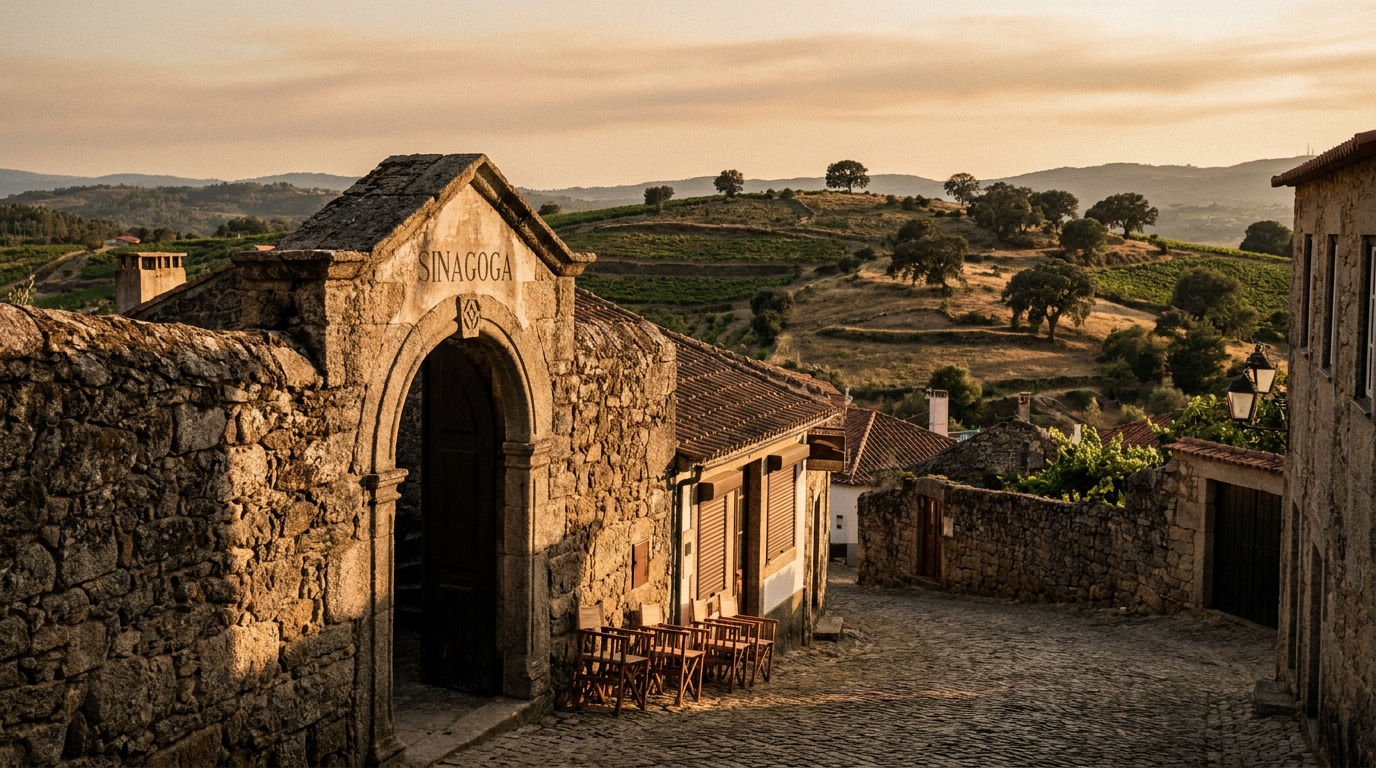
Portugal's rich tapestry of history includes a profound Jewish heritage, often hidden but now increasingly accessible. From the bustling capital to tranquil villages, ancient synagogues and former Jewish quarters tell stories of a vibrant community, persecution, and resilience. This guide uncovers ten significant historical sites, offering a practical pathway to explore this compelling aspect of Portuguese culture.
Lisbon & Central Portugal's Jewish Footprints
Begin your exploration in the capital. The **Rossio Jewish Memorial** commemorates the 1506 massacre, a sobering reminder of past events. Nearby, the **Alfama district** was home to one of the city's largest Jewish quarters, the Judiaria Grande. While few physical remnants remain visible, wandering its narrow streets evokes the historical presence. For local city travel, walking or a taxi/Uber/Bolt are convenient options. Journey inland to Tomar, home to the remarkably preserved **Synagogue of Tomar**, now the Abraham Zacuto Museum. This 15th-century synagogue is one of Portugal's oldest and most significant. Its unique architecture and historical context offer deep insights. A private driver is the most comfortable way to reach Tomar from Lisbon, a journey typically taking around 1.5 to 2 hours. The historic university city of Coimbra also held a significant Jewish community. Explore the former **Judiaria** around Rua Corpo de Deus, where a synagogue once stood. The area retains some of its medieval charm, hinting at the community that thrived here before the Edict of Expulsion. Getting from Tomar to Coimbra with a private driver takes approximately 1 hour.The Beiras — A Stronghold of Crypto-Judaism
This central region, particularly around the Serra da Estrela mountains, became a refuge for many Jews who outwardly converted to Christianity but secretly maintained their faith. Belmonte stands out as the only community in Portugal where a crypto-Jewish community openly reverted to Judaism in the 20th century. Visit the **Jewish Museum of Belmonte** to understand this unique history and the **Synagogue of Belmonte**, a symbol of their renewed faith. Nestled nearby, Castelo de Vide boasts one of Portugal's best-preserved medieval **Judiarias**. Its highlight is the **Old Synagogue**, dating back to the 13th century, complete with a women's gallery and a stone ark. The charming walled town of Trancoso features a well-marked **Jewish Interpretive Centre** and a captivating **Judiaria**. Look for the 'Pedra de Ançã' (Ançã Stone) inscription, believed to be a mezuzah place. Portugal's highest city, Guarda, also had a prominent Jewish quarter. Wander through its ancient streets to imagine the vibrant community that once lived here. Travel between these Beiras towns is best facilitated by a private driver, allowing flexibility to explore at your own pace. For instance, Belmonte to Castelo de Vide is about a 1.5-hour drive.From Northern Shores to Southern Sands
Portugal's second city, Porto, is home to a thriving modern Jewish community and significant historical sites. The **Jewish Museum of Porto** offers a comprehensive overview of the city's Jewish history. The magnificent **Kadoorie Mekor Haim Synagogue** is one of the largest on the Iberian Peninsula, an architectural marvel built in the 20th century, but reflecting a deep historical connection. Getting from Coimbra to Porto with a private driver takes approximately 1.5 to 2 hours. A UNESCO World Heritage site in the Alentejo, Évora's **Judiaria** was once a bustling quarter. While little remains of the physical structures, exploring the streets that comprised the former Jewish quarter offers a glimpse into its past. In the Algarve, Faro holds the distinction of having one of the few remaining **Jewish Cemeteries** in Portugal. Dating back to 1838, it's a poignant reminder of the community that returned after the Edict of Expulsion. Reaching Évora from Lisbon by private driver takes around 1.5 hours. From Évora to Faro is approximately a 2.5-hour drive.Many smaller Jewish heritage sites benefit from pre-booking or contacting local tourism offices in advance, especially outside peak season, to ensure access and availability of information.
Costs & Timing for Your Exploration
Exploring Portugal's Jewish historical sites involves various considerations for both budget and itinerary. Entrance fees for museums and synagogues are generally modest; always check official websites for current ticket prices. Some historical quarters are free to explore, offering a budget-friendly way to connect with the past. For inter-city travel, a private driver offers comfort and flexibility, allowing you to tailor your journey precisely. Pricing for such services depends on factors like group size, vehicle choice, and the specific route. For a personalised estimate, it is advisable to request a tailored quote. Factor in travel time between locations; for example, a journey from Lisbon to Porto is roughly 3-4 hours by private driver, while exploring the Beiras region requires several shorter drives between towns.Frequently Asked Questions
What is the best time of year to visit Jewish historical sites in Portugal?
Spring (April-May) and Autumn (September-October) offer pleasant weather for exploring, avoiding the intense summer heat and larger crowds.
Are the sites generally accessible for visitors with mobility issues?
Many historical quarters feature cobblestone streets and uneven terrain, which can pose challenges. Modern museums and synagogues may offer better accessibility. It's advisable to check specific site details in advance.
Can I find kosher food in Portugal?
Kosher food options are primarily available in larger cities like Lisbon and Porto, which have active Jewish communities and dedicated shops or restaurants. In smaller towns, options may be limited.
Is it necessary to book tours in advance for these sites?
While not always strictly necessary for individual entry, booking guided tours, especially for smaller synagogues or interpretive centres, is highly recommended to ensure access and enhance your understanding of the history.
What languages are spoken at the Jewish museums and centres?
Information at most museums and centres is typically provided in Portuguese and English. Some may also offer materials in other languages, such as Hebrew or Spanish.
Are there active Jewish communities in Portugal today?
Yes, there are active Jewish communities in Portugal, notably in Lisbon, Porto, and Belmonte, reflecting a modern resurgence and historical continuity.
What is a 'Judiaria'?
A 'Judiaria' refers to the Jewish quarter or ghetto in historical Portuguese towns and cities. These were designated areas where Jewish communities lived, worked, and worshipped prior to the Edict of Expulsion in 1496.
How long should I plan for a trip focusing on Jewish heritage?
To comfortably visit a selection of these sites across different regions, a trip of 7 to 10 days is recommended. This allows sufficient travel time and in-depth exploration without rushing.